Leaf guards in South Florida help gutters handle rainy conditions by reducing the leaves, seed pods, twigs, and other debris that can restrict water flow. They do not make gutters maintenance-free or prevent every possible overflow. However, when the gutters, downspouts, pitch, and drainage system are working correctly, properly selected leaf guards can help rainwater move through the system with fewer debris-related blockages.
Heavy rain does not create a gutter clog by itself. The bigger problem occurs when rain reaches a gutter that is already partially blocked by leaves, roof debris, seeds, twigs, or other buildup.
That is why homeowners considering Leaf Guards in South Florida should think about the entire drainage system rather than viewing a gutter guard as a stand-alone product. The guard helps keep debris out. The gutter still needs the correct pitch, adequate capacity, properly positioned downspouts, secure attachments, and a clear discharge path.
Why Are Leaf Guards Useful During South Florida Rainstorms?
South Florida places a significant demand on residential gutter systems. The National Weather Service defines the region’s wet season as roughly May 15 through October 15 and reports that a large share of the area’s annual rainfall occurs during these months.
That means gutters may need to move substantial amounts of roof runoff during repeated afternoon thunderstorms, tropical weather, and other periods of intense rainfall.
If the gutter opening is restricted by debris, there is less room for water to move through the system. Water may then spill over the front or back of the gutter instead of reaching the downspout as intended.
A leaf guard cannot control how much rain falls, but it can help address one preventable part of the problem: debris entering and restricting the gutter.
How Do Leaf Guard Systems Work?
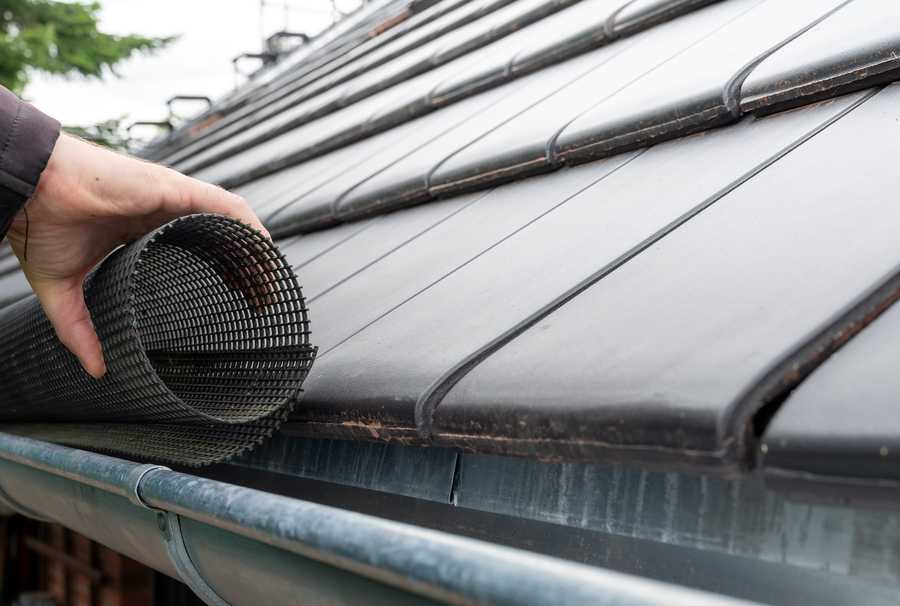
A leaf guard, sometimes called a gutter guard, creates a barrier between falling debris and the open gutter. Water passes through or around the protective surface while larger debris is kept outside the gutter channel.
Different leaf guard systems accomplish this in different ways. Some use fine mesh or micro-mesh openings. Others use screens or solid-surface designs that direct water toward an opening while allowing debris to move away from the gutter.
The right choice depends on several factors, including:
- The type and size of debris around your property
- Your roof material and roofline
- The pitch and condition of your existing gutters
- The volume and direction of roof runoff
- Downspout placement and capacity
- How easily the system can be inspected and maintained
There is no single guard that is automatically right for every South Florida home. That is why we evaluate the existing gutter system before recommending a solution.
What Problems Can Leaf Guards Help Reduce?
Debris-Related Gutter Clogs
The primary purpose of a leaf guard is simple: keep as much unwanted material as possible from settling inside the gutter.
This can be particularly helpful around properties with palms, mature trees, seed-producing landscaping, or other vegetation close to the roof. Keeping larger debris out gives rainwater a clearer path toward the downspouts.
Overflow Caused by Blocked Gutters
A gutter full of leaves has less usable capacity than a clear gutter. During a strong rainstorm, that restriction can become obvious very quickly.
Water spilling over the gutter edge may land near walls, walkways, landscaping, or the perimeter of the home. Proper gutter protection can reduce debris-related overflow, although overflow can also occur because of undersized gutters, incorrect pitch, insufficient downspouts, roof-valley runoff, or other drainage problems.
Frequent Gutter Cleaning
Leaf guards can reduce how frequently gutters need to be cleared of large debris. That is an important distinction from saying they eliminate maintenance completely.
No gutter protection system should be installed and permanently forgotten. Fine material can still accumulate on top of or around a guard, and gutters and downspouts should still be inspected periodically.
The goal is lower maintenance, not zero maintenance.
What Leaf Guards Cannot Do During a Storm
It is equally important to understand what gutter guards cannot do.
Leaf guards are not hurricane protection, flood protection, roof waterproofing, or a substitute for properly installed gutters and downspouts.
They also cannot correct:
- Gutters that are too small for the roof drainage area
- Improper gutter pitch
- Loose or damaged gutter sections
- Blocked downspouts
- Water being discharged too close to the home
- Roof valleys concentrating excessive runoff in one location
- Poor grading or drainage around the property
If your gutters overflow even when they are clean, installing a guard without diagnosing the underlying issue may not solve the problem. Our experts at KandB Gutters recommend evaluating the gutter system first and then choosing the appropriate protection.
Leaf Guards vs. Regular Gutter Cleaning
| Consideration | Open Gutters | Gutters With Leaf Guards |
|---|---|---|
| Leaves and larger debris | Can fall directly into the gutter | Much of the debris is blocked before entering |
| Cleaning needs | May require more frequent debris removal | Can reduce cleaning frequency but does not eliminate inspection |
| Heavy rain performance | Depends heavily on keeping the gutter clear | Can help maintain a clearer drainage path when properly selected and installed |
| Maintenance | Debris must be removed from inside the gutter | Debris may still need to be cleared from the guard surface or surrounding areas |
| Upfront cost | No guard installation cost | Requires an additional initial investment |
Whether gutter guard installation makes financial sense depends on your property, the amount of surrounding debris, the condition of your current gutters, and how often you would otherwise need cleaning.
We do not recommend choosing a system based only on finding the cheapest or most affordable leaf guards. A lower-priced guard that does not work well with your roof, gutter, or local debris can become an ongoing maintenance problem of its own.
Can Leaf Guards Handle South Florida’s Heavy Rain?
They can help a properly functioning gutter system perform during heavy rain by reducing debris-related restrictions, but the guard itself is only one part of the system.
During an evaluation, we look beyond the protective screen or surface. Gutter pitch, downspout capacity, roof runoff, existing damage, and the way water leaves the property all matter.
This is especially important in Broward and Palm Beach Counties, where strong downpours can expose problems that may not be noticeable during light rain.
If you see water shooting over one particular section, spilling behind the gutter, collecting near a downspout, or pooling beside the home, the problem deserves further inspection rather than automatically assuming a leaf guard alone will fix it.
Can Leaf Guards Be Added to Existing Gutters?
In many cases, yes. Gutter guard installation in South Florida can often be completed on an existing gutter system if those gutters are still in suitable condition.
Before installing guards, we look for conditions such as:
- Sagging sections
- Loose fasteners
- Incorrect pitch
- Leaks or separated joints
- Damaged fascia attachment areas
- Poorly positioned downspouts
- Existing drainage problems
If your current gutters need repair, it usually makes more sense to address those problems before covering the system with gutter guards.
You can review our complete gutter services or read more about our leaf guard installation services before deciding which option fits your property.
What Should You Look for in a Gutter Guard Installer?
A good gutter guard installer should evaluate more than the linear footage of your gutters.
Ask whether the installer will inspect:
- The condition of the existing gutter system
- Gutter pitch and drainage direction
- Downspout placement
- Roof runoff patterns
- The type of trees and debris around the property
- Compatibility between the guard, gutter, and roof
- How the finished system should be inspected and maintained
We serve homeowners and businesses throughout Broward and Palm Beach Counties. Our approach is to evaluate the property and recommend the gutter or leaf guard solution that fits the actual drainage conditions rather than assuming the same product will work for every home.
Should You Install Leaf Guards Before South Florida’s Rainy Season?
You do not have to wait for a particular month, but having gutters inspected before periods of frequent heavy rain can help uncover problems before the next major downpour exposes them.
UF/IFAS recommends keeping gutters and downspouts clear of leaves and debris and checking that water flows freely after heavy rain. A gutter guard can make that maintenance easier by reducing the amount of larger debris that enters the system in the first place.
If you already notice overflowing gutters, standing water near downspouts, sagging sections, or frequent clogging, address the problem rather than waiting for a tropical system or repeated summer thunderstorms.
Talk With Us About Leaf Guards in South Florida
If clogged gutters are becoming a recurring problem, we can inspect your current system and help determine whether leaf guards, gutter repairs, additional drainage improvements, or a combination of solutions makes sense for your property.
For service in Broward County, call us at (954) 790-8040. For Palm Beach County, call (561) 523-1019. You can also request a quote or consultation online.
Frequently Asked Questions About Leaf Guards
Do leaf guards completely stop gutters from clogging?
No gutter guard can guarantee that a gutter will never clog. A quality system can significantly reduce leaves and larger debris entering the gutter, but fine particles and surface debris can still accumulate. Periodic inspection remains important, especially after severe weather or when trees are located close to the roof.
Do gutters with leaf guards still need cleaning?
Yes, although they may require considerably less debris removal than open gutters. Leaves and other material can collect on top of some guards or around roof valleys and downspout areas. The system should still be inspected periodically to confirm that water has a clear path through the gutters and downspouts.
Are leaf guards good for heavy rain?
Leaf guards can help during heavy rain by reducing debris-related restrictions inside the gutter. They cannot increase an undersized gutter’s capacity or fix poor pitch, blocked downspouts, or drainage problems. Effective stormwater management depends on the guard and the underlying gutter system working together.
What type of leaf guard works best in South Florida?
The best option depends on your roof, gutter system, nearby vegetation, debris type, and drainage needs. Micro-mesh, screen, and solid-surface designs work differently, so we recommend evaluating the property rather than choosing based on a brand name or one advertised feature alone.
Can you install a leaf guard on my existing gutters?
Often, yes. Existing gutters should first be checked for sagging, leaks, improper pitch, damage, and drainage problems. If the gutter system is still in good condition and compatible with the selected guard, adding protection may be possible without replacing the entire gutter system.
Will leaf guards prevent water damage to my home?
Leaf guards can help reduce one potential cause of gutter overflow: debris-related clogging. They cannot guarantee that water damage will never occur. Roof conditions, gutter capacity, downspouts, grading, drainage, wind-driven rain, and other factors can also affect how water behaves around a property.
How much does leaf guard installation cost in South Florida?
Pricing varies according to the length and condition of your gutters, roof configuration, property access, system type, and whether gutter repairs are needed first. An on-site evaluation provides a more meaningful estimate than a generic price per foot because every home’s drainage system is different.
Are leaf guards worth installing in Broward or Palm Beach County?
They can be worthwhile if leaves and debris repeatedly clog your gutters or if you want to reduce ongoing gutter maintenance. The value depends on your property and existing system, so we recommend comparing the cost of installation with your current cleaning needs, debris exposure, and gutter condition.